This post is an AI translation of the Chinese original. If there are any discrepancies, the Chinese version takes precedence.
By now, I’ve been working for more than a decade, with most of that time spent doing my part for the automotive industry. We’re neither an OEM nor a Tier 1 or Tier 2 supplier, but as someone working on IT for the auto industry, I’ve felt its growing slowdown firsthand over the past few years.
Around 2020, China’s auto industry was probably at its most prosperous. New technologies and concepts were everywhere: game-changing electrical/electronic architectures, smart cockpits, and autonomous driving. New brands seemed to pop up overnight too: Leapmotor, Neta, and many more.
It was clearly a period of money pouring in and real momentum. Along with spending on marketing, PR, and R&D, automakers and TierX suppliers were riding strong profits to modernize their IT systems: building centralized enterprise data lakes, establishing mature R&D DevOps platforms and toolchains, building closed-loop data systems for autonomous driving, replacing aging internal IT systems, and so on.
Back then, even IT companies on the edge of the auto sector could ride that wave and get a share. Maybe it was only the leftovers, but there was enough to leave us fat and happy. It was a good time.
Personally, that was also the period when I grew the fastest: demand was endless, projects kept coming, and we started running out of people. We did not have enough people to get the work done, or enough people who could take responsibility.
One clearly over-the-top “grind king” moment got me noticed for the first time: another colleague and I delivered a project worth 1 million in two months, through endless late nights and overtime. After that, I naturally took on more and more work beyond the basics: architecture, PM, TPM, department management, and eventually presales, which is already my main job now.
Back then, even though the workload kept growing, I could feel myself growing fast too. It hurt, but I enjoyed it.
Then, around 2024 or 2025, signs of decline started to show. Clients began approaching us to discuss cutting the price within an existing contract, and budgets for new requirements kept shrinking. Working in presales, I found myself contributing to bids that moved further and further outside the areas I was relatively good at. I was suddenly covering every kind of OEM business. At the most ridiculous point, I had to write a bid proposal on how we could provide logistics services to an OEM…
By 2026, it feels even harder. Competition in China has become brutal: vehicle prices keep sinking, while features keep getting piled on. In the short term, that does benefit consumers. But in the long term, everyone across the supply chain ends up paying for the final low price through layer after layer of squeezing and being squeezed. It is a vicious cycle.
Recently, a project I manage is up for renewal again. After putting together a “perfect” technical proposal, we’re back in the usual client-vendor tug-of-war over how to make the price even lower, with plenty of manipulation thrown in. Honestly, I can’t imagine how hard delivery will become, or how it could put us directly into the red, if we accept that manipulation just to survive. But I also can’t imagine what will become of the people on the project if the renewal fails.
Over the past few days, several people have left other teams one after another. One colleague messaged me before he left: “A couple weeks ago, I was still thinking we should meet and talk about how to write bid proposals. I didn’t expect today to be my last day. Take care.”
By the time I saw that late-night message, it was early the next morning. His avatar had already gone gray. All I could do was reply on WeChat: “Maybe leaving now isn’t necessarily a bad thing. I wish you the best of luck.” That was meant to comfort him, but wasn’t it also my own inner monologue?
Maybe I’m also waiting for some outside force to give me a push, so I can break out of this state that’s “not satisfying enough to keep, but too good to give up” (the salary really is still decent) and look for a new path?
Everything is still unknown. A grain of sand from an era may be a mountain to an ordinary person.
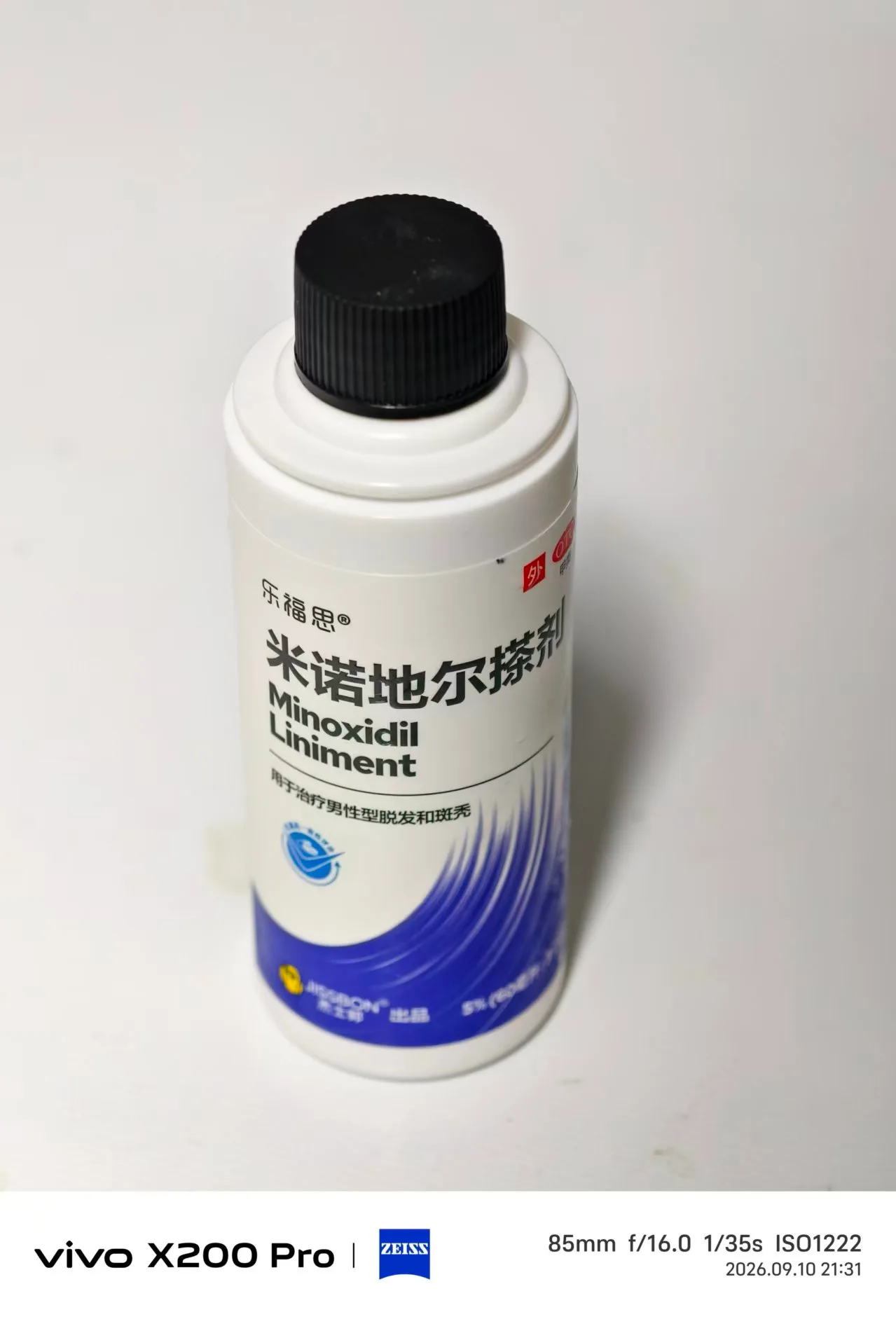
I’ll keep applying my minoxidil. Whatever happens next, I need to do my best to hold on to the little hair I have left.